
Stump Grinding in Surrey
Got a Stump That Needs Sorting?
Left with a stump after a tree removal? Treemedic provide professional stump grinding across Surrey and South West London, grinding stumps well below ground level so the area is safe, tidy and ready for whatever you want to do with it next. We cover Hersham, Esher, Cobham, Weybridge, Walton on Thames, Thames Ditton and across Surrey.
Fully insured and free quotes as standard.
Why Stump Grinding Matters
Stumps left in the ground cause more problems than people expect. They’re a trip hazard, they attract fungi and pests, and they’ll send up new shoots from the roots for years if left untreated. They also make it awkward to mow or use that part of the garden, and get in the way if you want to replant or landscape.
What’s Included in Our Stump Grinding Service
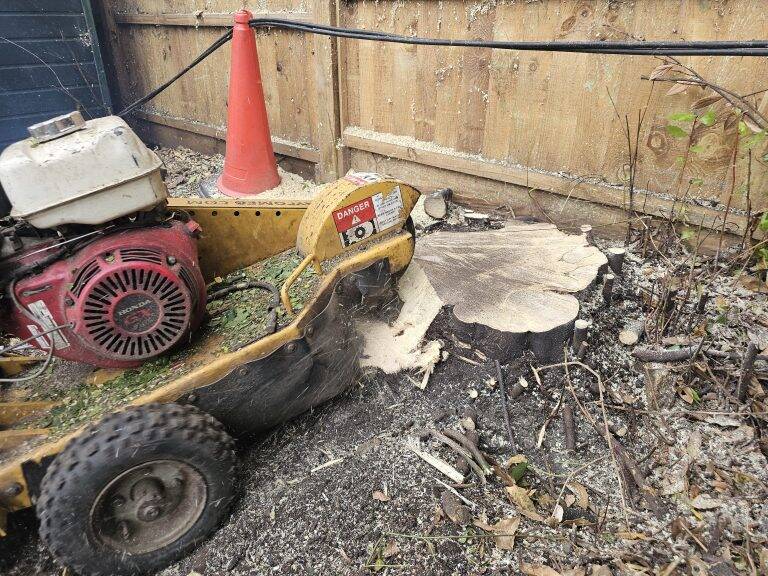
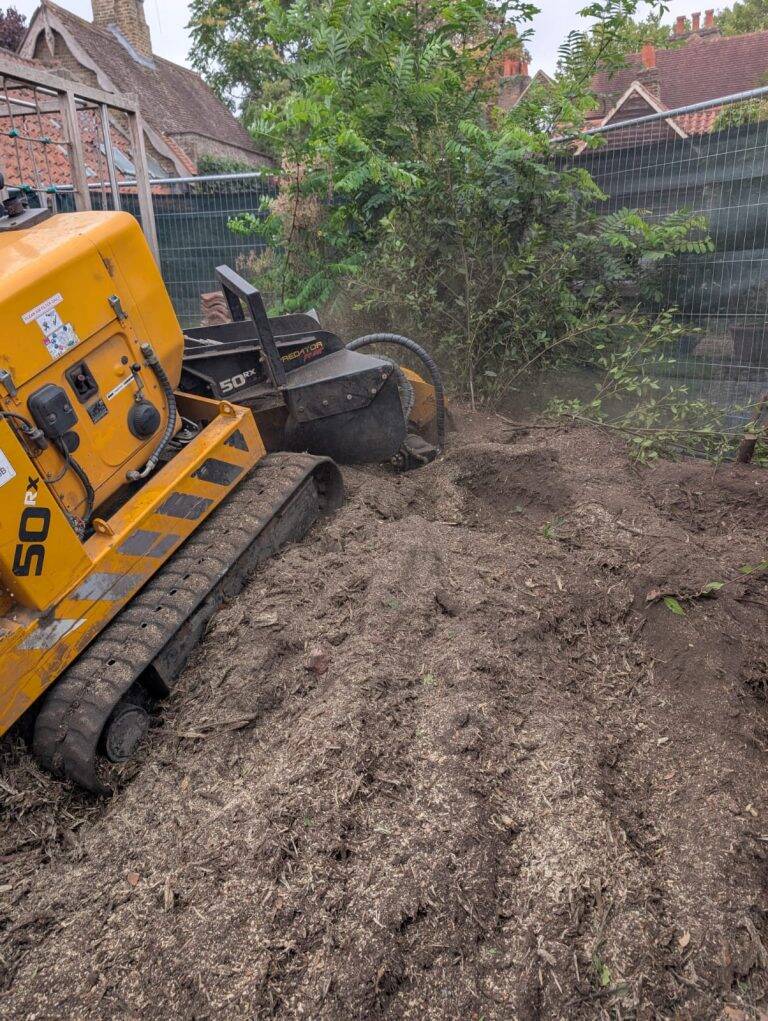
Thorough Below-Ground Removal
We grind the whole stump out, taking it to around 300mm below ground level along with the surface roots. The hole is then backfilled with the grindings and compacted down, so you're left with a levelled area rather than a crater — usually with a small mound of surplus grindings that settles over the following months.
We don't chase roots. The deeper root system stays in the ground and decays naturally, returning nutrients to the soil. Excavating a full root system means digging up a large part of the garden, and it's rarely worth the cost or the mess it makes.Our Machinery - Will It Get to Your Stump?
The question everyone should ask before booking, and almost nobody does until the crew are standing in the driveway.
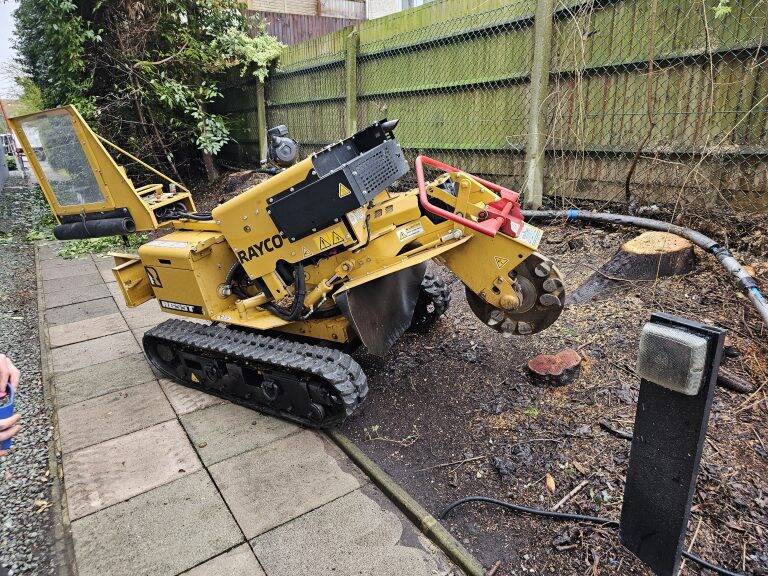
Our main grinder is 63cm wide. So:
• 70cm or more at the narrowest point — comfortable, no problem
• 65cm — tight, but usually workable
• Under 63cm — the machine won't physically pass. Not impossible to sort, but we need to know beforehand
Measure the narrowest point on the route, not the widest. That's usually a side gate, but it can also be a passage between house and fence, a gap between wall and shed, or the gate posts rather than the gate opening. Taking a gate off its hinges solves a surprising number of jobs.
Also worth telling us about steps, slopes, soft or waterlogged ground, and whether there's front garden access if the back is impossible.
For larger stumps we hire in. That's deliberate — one machine can't be right for every job, and we'd rather bring the correct kit than spend three days battling something with a grinder that's undersized for it. Small to medium stumps we can often fit in quickly since the machine is ours; larger ones need a bit more notice while we arrange the right machine.
Sending us a photo of the access route with your enquiry saves everyone a wasted visit.Clean-Up and Waste Handling
Once grinding is complete, we tidy all grindings into a neat pile. If required, we can remove grindings and backfill with topsoil for an additional charge — just ask during your quote. You’ll be left with a clean, ready-to-use surface.
Why We Won't Quote a Stump Over the Phone
People often ask for a price based on diameter alone, and it isn’t a reliable guide.
A large but well-decayed stump can grind out faster than a smaller sound one. A 40cm oak that’s still solid is harder work than a 1.5m poplar that’s been rotting for five years. Species, condition, root spread and how much stone is in the ground all change the job.
What actually determines the price:
- Stump diameter and condition
- Species — some are far denser than others
- Access, which is often the single biggest factor
- Number of stumps
- Whether the grindings are staying or going
- Soil and stone content — buried rubble and flint blunts teeth fast
We come out, look at it, and give you a fixed written price. Free, and no obligation.
What You're Left With
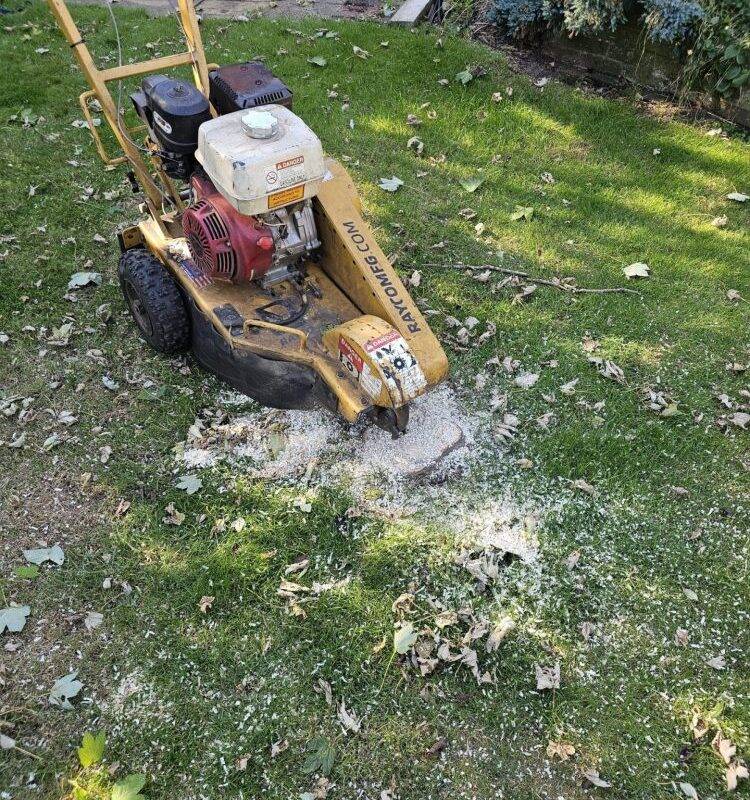
A backfilled, levelled area. We fill the hole with the grindings and compact them down, then level off what’s left rather than leaving a heap on the lawn. There’s usually a small mound over the top — grinding produces a lot more material than the stump looked like it would, and it won’t all go back into the hole.
That mound settles over the following months as the grindings break down. Expect it to end up level or slightly low after a year, at which point a bit of topsoil sorts it out. It’s an easy job to do yourself.
Surplus grindings work well spread as mulch on beds, away from stems, if you’d rather use them than leave them in place.
If you’d rather they went, we can remove the grindings for an additional charge and backfill with topsoil for a further charge on top. Both quoted separately – just say when we come out.
Planning to plant where the stump was?
Tell us when we quote, but the honest advice is usually: wait.
Fresh grindings are high in carbon and lock up nitrogen as they break down, so anything planted straight into them struggles. There’s also decaying root material still in the ground, and some species suffer replant problems in the same position regardless.
Two better options: plant a couple of metres off to one side, or give the ground time to settle. We’ll advise on a realistic timescale when we come out – what we won’t do is tell you it’s fine to plant next weekend when it isn’t.
Regrowth
Cherry, poplar, lilac and false acacia sucker from remaining roots. Grinding reduces this substantially but won’t always stop it entirely, and any suckers already coming up elsewhere in the lawn will continue. We’ll be straight about what to expect for your species.
Ecoplug treatment
For species that sucker aggressively — cherry, poplar, lilac, false acacia — grinding alone doesn’t always stop regrowth from the remaining roots. Where that’s likely, we can treat the stump with Ecoplugs: a plug driven into the wood that releases herbicide directly into the stump, killing the root system rather than relying on the tree simply giving up.
It’s targeted, contained within the stump, and far more effective than grinding alone on the difficult species. We’ll tell you when it’s worth doing and when it isn’t — for most trees it isn’t necessary.
Quoted separately, so just mention it when we come out.
Before We Arrive
Underground services. This is the one that matters. We need to know about anything buried near the stump — gas, water, electric, drainage, garden lighting cable, irrigation, sprinkler lines, dog fence wire. If you’re not certain, say so and we’ll work more cautiously. If you have a service plan, have it to hand.
Clear the area if you can. Pots, furniture, ornaments and anything breakable within a few metres. Grinding throws debris.
Cars off the drive if the route runs past them.
Tell the neighbours if the stump is near a boundary. It’s noisy for a while.
Pets and children indoors while the machine is running.
Why Choose Treemedic Ltd for Stump Grinding?
We are a local team based in Hersham covering Surrey and South West London. Fully insured, experienced and equipped to handle stumps of all sizes in all sorts of access situations, from tight residential back gardens to larger open sites. We will always give you a straight quote with no hidden extras. Call us on 07522 167 197 or 020 3488 8694 for a free no-obligation quote.
Ready for a Stump-Free Garden?
Got a stump that’s been bothering you? Let’s sort it.
Call 07522 167 197 or 020 3488 8694 for a free site visit and quote.
Treemedic Ltd serves Hersham, Esher, Cobham, Weybridge, Kingston, Richmond, and all surrounding Surrey areas.
Visit the Royal Horticultural Society for expert stump care and replanting advice.
FAQ
Does stump grinding remove the roots?
No – stump grinding reduces the stump below ground level, destroying the central stump and some near-surface roots, but deeper roots remain and decay naturally over time.
How deep do you grind the stump?
We take the whole stump out, to around 300mm below ground level along with the surface roots. The hole is backfilled with the grindings and compacted, leaving a levelled area you can turf or seed over.
Can you remove grindings and backfill?
We backfill the hole with the grindings and compact them down as standard, levelling off what’s left. If you’d rather they went, removal is available at additional cost, and backfilling with topsoil is a further cost on top. Mention it when we quote and we’ll price both.
Do I need to check for underground services before stump grinding?
Yes – the client should confirm whether there are any known underground utilities such as cables, pipes, or irrigation lines before work begins. This ensures the area is safe and suitable for stump grinding.
Will your machine fit through my side gate?
The grinder is 63cm wide. Measure the narrowest point on the route — 70cm or more is comfortable, 65cm is tight but usually fine. Under 63cm and we need to talk options before booking. Taking the gate off its hinges solves a lot of these.
How much does stump grinding cost?
It depends on diameter, condition, species, access and number of stumps. A decayed stump can be quicker to grind than a smaller sound one, which is why we look before quoting rather than pricing off a photo. Free site visits and fixed written prices.
Will the stump grow back?
The stump won’t, but some species sucker from remaining roots — cherry, poplar and lilac are the usual culprits. Grinding reduces this a lot but doesn’t always eliminate it entirely.
My tree keeps sending up suckers. Will grinding stop it?
It reduces it substantially but won’t always stop it entirely on species like cherry, poplar, lilac and false acacia. For those we can treat the stump with Ecoplugs, which put herbicide directly into the stump and kill the root system. Mention it when we quote and we’ll price it in.
Can I plant a new tree where the stump was?
Best not to straight away. Fresh grindings lock up nitrogen and there’s decaying root material still in the ground, so a new tree will struggle. We’d usually suggest planting a couple of metres off to one side, or waiting for the ground to settle. If you’re set on the same spot, removal and topsoil backfill helps – both quoted as extras.
Do I need permission to grind a stump?
Grinding a stump from a tree that’s already been lawfully removed doesn’t normally need consent. But if the tree is still standing and has a Tree Preservation Order or sits in a conservation area, you need consent or notice before felling it. We check that as part of the quote.
