
How to Look After Your Trees and Hedges During a Hosepipe Ban or Drought
Hosepipe bans and dry summers are becoming a regular part of gardening in the UK, and trees and hedges often get overlooked while everyone focuses on the lawn. The good news is that most established trees and hedges cope with a dry spell just fine, it’s newly planted ones, and anything already under stress, that need a bit of help. Here’s what we tell our own clients across Surrey and South West London.
What a Hosepipe Ban Actually Restricts
A hosepipe ban (or “Temporary Use Ban”) stops you using a hosepipe or sprinkler for things like watering the garden, washing the car or filling a paddling pool. It doesn’t usually stop you watering by hand with a watering can, or using water you’ve collected in a water butt or reused from the home. Rules and exemptions vary slightly by water company, so if you’re not sure, it’s worth checking your supplier’s website, but as a rule of thumb, a watering can is your friend here.
Newly Planted Trees and Hedges
(Under 2–3 Years Old)
These are the ones that need the most attention. A tree or hedge that hasn’t had time to establish a deep root system can’t reach moisture further down in the soil the way an older one can, so it’s relying on you.
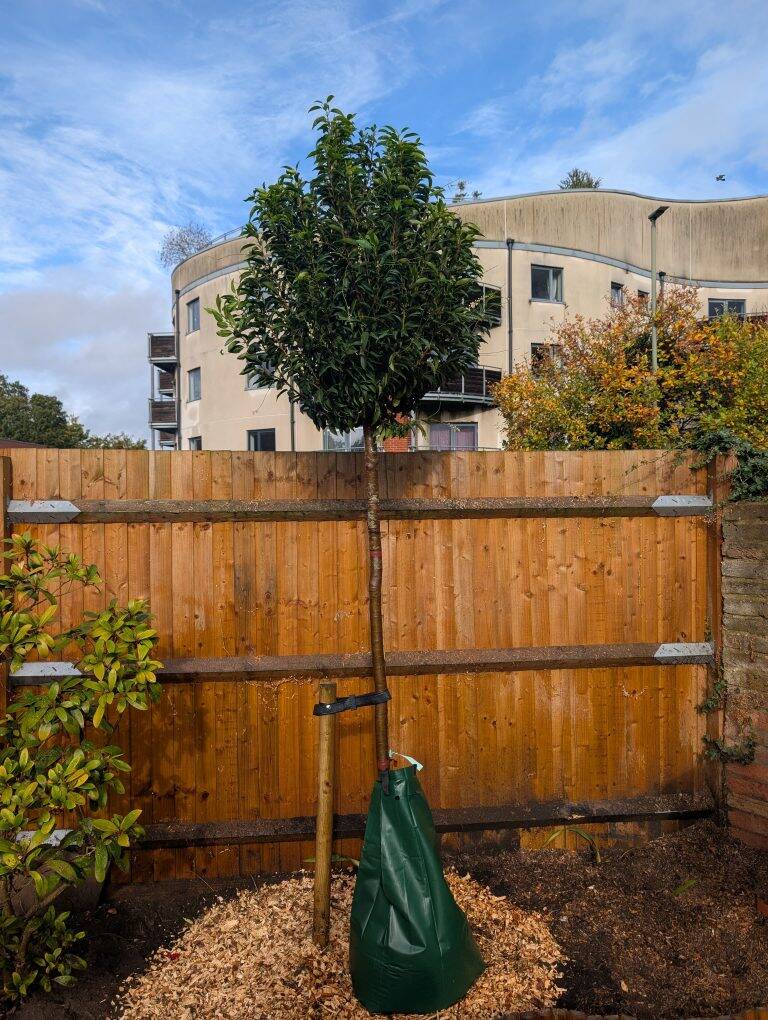
- Water deeply, not often. One or two thorough waterings a week beats a splash every day, a light daily watering only wets the top inch or two of soil and encourages roots to stay shallow, which makes the plant less drought-resistant long term, not more.
- Water at the base, not over the foliage, so it actually reaches the roots.
- Mulch around the base with bark chip or well-rotted compost, keeping it clear of the trunk itself. A good mulch layer can make a real difference to how much moisture stays in the soil.
- Water in the early morning or evening rather than the middle of the day, to cut down on evaporation.
- If you’re not sure how much to give a tree we’ve planted for you, get in touch, happy to talk you through it based on the species and where it’s planted.
Established Trees and Hedges
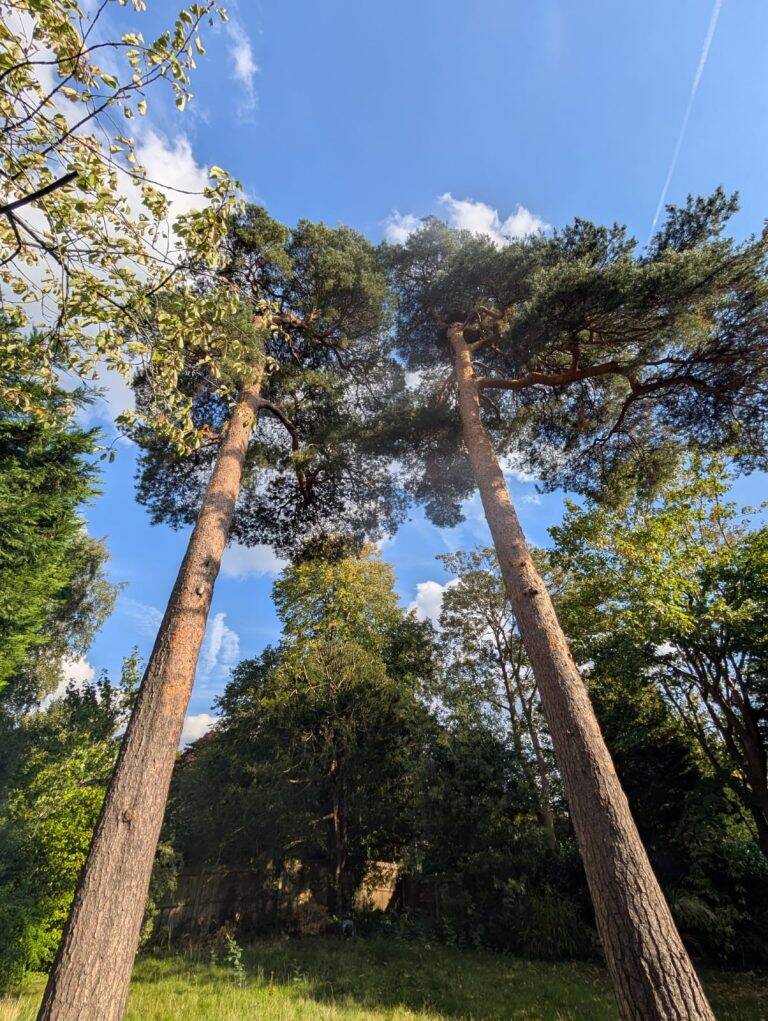
Mature trees generally cope with dry weather better than young ones, but “generally cope” isn’t the same as unaffected, and in a prolonged, intense drought, established trees can and do struggle too, particularly ones in shallow soil, confined spaces, or already under some other stress. It’s not just a young-tree problem.
- Leaf scorch, early leaf drop or wilting in a heatwave is common, and on its own isn’t necessarily a sign of anything serious, it’s often the tree conserving water. But in a prolonged, severe drought it can be an early warning sign rather than a passing phase, so it’s worth watching how a tree responds rather than assuming it’ll bounce back on its own.
- Branch dieback is a more serious sign. When a tree can’t get enough water to all its branches, it prioritises the core of the crown and lets smaller twigs or outer branches die back, you’ll see brittle branches, sparse foliage, or patches of canopy that stay bare.
- Drought stress makes trees more vulnerable to pests and disease, and the effects can persist for a year or more after the weather improves, a tree can survive one bad summer and then decline the following year as the stress catches up with it.
- Don’t prune a stressed tree unless there’s a safety reason to. Pruning is itself a stress on the tree, so unnecessary work during a drought can do more harm than good.
- Signs worth getting checked out: significant crown dieback, bark splitting, branches dropping without warning, fungal growth at the base, or a tree that hasn’t recovered once cooler, wetter weather returns. If you’re noticing any of this on a mature tree this summer, it’s worth having it looked at rather than waiting to see what happens.
Hedges Specifically
Hedges planted in the last year or two are the most vulnerable and need the same care as a newly planted tree, deep, infrequent watering at the base with a can, not a hosepipe, plus a mulch layer if you can.
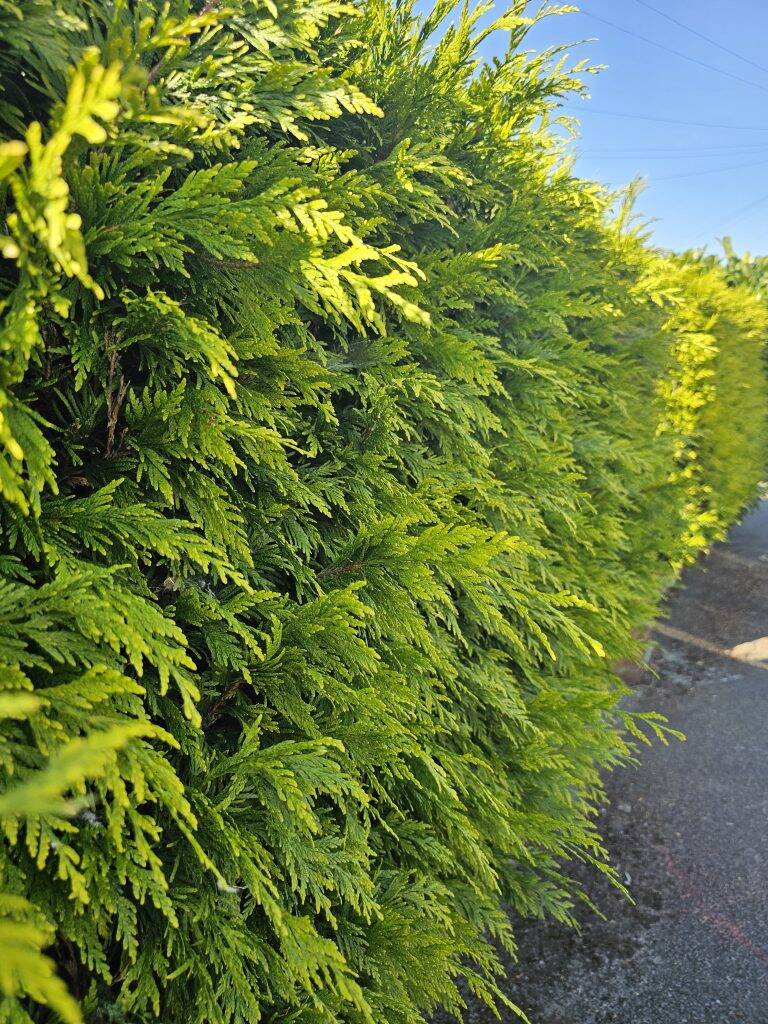
But established hedges aren’t automatically safe either, especially conifer hedges like leylandii, which are quick to show drought stress and slow to recover from it. Worth knowing:
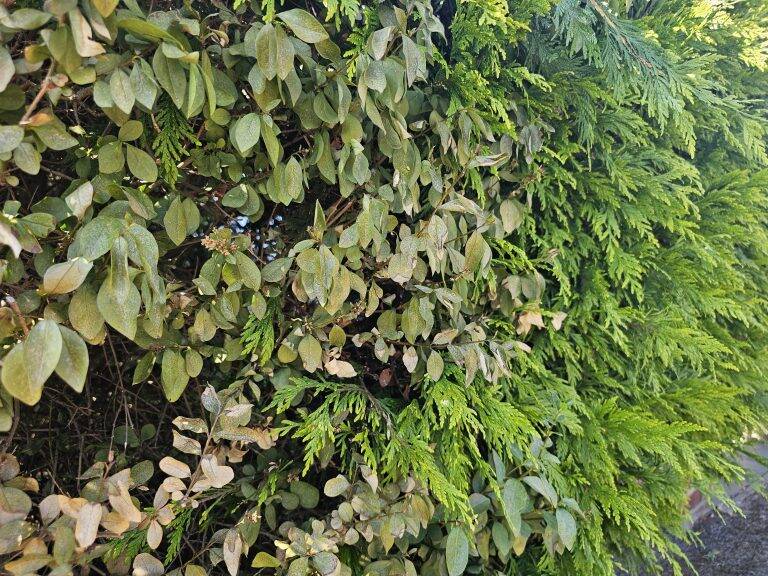
- Early signs to watch for: wilting or drooping foliage (often most obvious in the afternoon), yellowing or browning, leaves curling inward, premature leaf drop, and branches that snap rather than bend.
- With leylandii and other conifers, by the time you see brown foliage the damage is often already done and won’t green back up: the aim is to catch it early and water proactively during a dry spell, rather than waiting for visible symptoms.
- A quick check: scratch a small section of bark gently with a fingernail, green underneath means that section is still alive, brown means it’s died back.
- Avoid trimming a stressed hedge more than necessary. Over-trimming a hedge that’s already under drought stress can weaken it further and leave it less able to recover.
If a hedge we’ve cut for you is showing any of these signs, get in touch, happy to take a look and advise whether it’s stress, or something else going on.
What Not to Do
- Don’t give a little water every day, it does more harm than good for root development, on trees and hedges alike.
- Don’t feed a tree or hedge with fertiliser during a drought, it can push new growth the plant doesn’t have the water to support.
- Don’t over-trim a hedge that’s already stressed, it’s covered in more detail above, but it’s worth repeating: cutting back a struggling hedge leaves it with less energy to recover.
- Don’t assume more water is always better, waterlogged soil can be just as damaging as dry soil, so let the top few inches dry out between waterings rather than watering on a fixed schedule regardless of conditions.
- Don’t wait for brown foliage before acting on a conifer hedge like leylandii, by then the damage is often done.
FAQ - Hosepipe Ban/ Drought
Is there ever a hosepipe ban in Surrey?
Hosepipe bans (officially “Temporary Use Bans”) get introduced by water companies during periods of low rainfall and high demand, usually over summer. They’re not permanent, and different water companies in Surrey can be affected at different times depending on their supply, some years none apply here at all. Check your water company’s website or your bill to confirm who supplies you and whether a ban is currently in place.
How do I keep a newly planted tree alive during a hosepipe ban?
Hosepipe bans typically still allow watering cans and water butts, it’s hosepipes and sprinklers that get restricted. For a newly planted tree, water deeply once or twice a week rather than little and often, so the roots are encouraged to grow down rather than staying near the surface. A layer of mulch around the base helps keep moisture in. If we’ve planted a tree for you recently, get in touch and we can talk you through what it needs for its first summer.
Can hot, dry weather damage established trees, not just new ones?
Yes, and in a severe drought this isn’t just a risk for young trees. Even mature trees can show leaf scorch, early leaf drop, wilting or branch dieback during a prolonged dry spell, especially where they’re growing in shallow soil or a confined space. The stress can also make a tree more vulnerable to pests and disease for a year or more afterwards. If you’re seeing dieback in the crown, bark splitting, or branches dropping unexpectedly, it’s worth getting it looked at.
Should I be watering my hedge during a drought?
Newly planted hedges (the last year or two) need the most help, water deeply at the base with a can rather than a hosepipe. But established hedges aren’t automatically fine either, especially conifer hedges like leylandii, which can go brown and struggle to recover if drought stress isn’t caught early. Keep an eye out for wilting, yellowing or browning foliage, or leaves curling inward, and water proactively rather than waiting for visible symptoms. If you’ve had a hedge planted or cut by us and it’s showing any of these signs, get in touch and we’ll take a look.
Am I still allowed to water my garden with a watering can or water butt during a ban?
Yes, generally. Hosepipe bans usually only restrict hosepipes and sprinklers, watering by can, or using water collected in a butt, is normally unaffected. Rules and exemptions vary slightly by water company, so it’s worth checking your supplier’s website if you’re unsure where you stand.
Drought Care, in Short
- Newly planted trees and hedges are the priority, deep watering once or twice a week beats a daily splash
- Established trees aren't automatically safe in a severe drought, especially in shallow soil or confined spaces
- Leylandii won't green back up once it's brown, so catch it early rather than waiting for symptoms
- We'll tell you whether it's drought stress or something else, rather than guessing
- Fully insured, NPTC qualified, working to BS3998
- Free site visits and honest advice, no obligation
When to Call a Professional
If you’re seeing significant dieback, bark splitting, fungal brackets, or a newly planted tree that isn’t recovering despite watering, it’s worth getting it looked at rather than guessing. We offer free, no-obligation advice and can assess whether it’s drought stress or something else going on.
Related Reading
Worried about a tree or hedge after a dry summer?
Call Treemedic Ltd today on
020 3488 8694 or 07522 167 197, or use our contact form for a free, no-obligation quote.
Office Opening Hours:
Monday – Friday: 07:00 AM – 17:00 PM
Saturday – Sunday: Closed
24/7 Emergency Call-Out Service Available
