
Honey Fungus: How to Spot It and What to Do About It
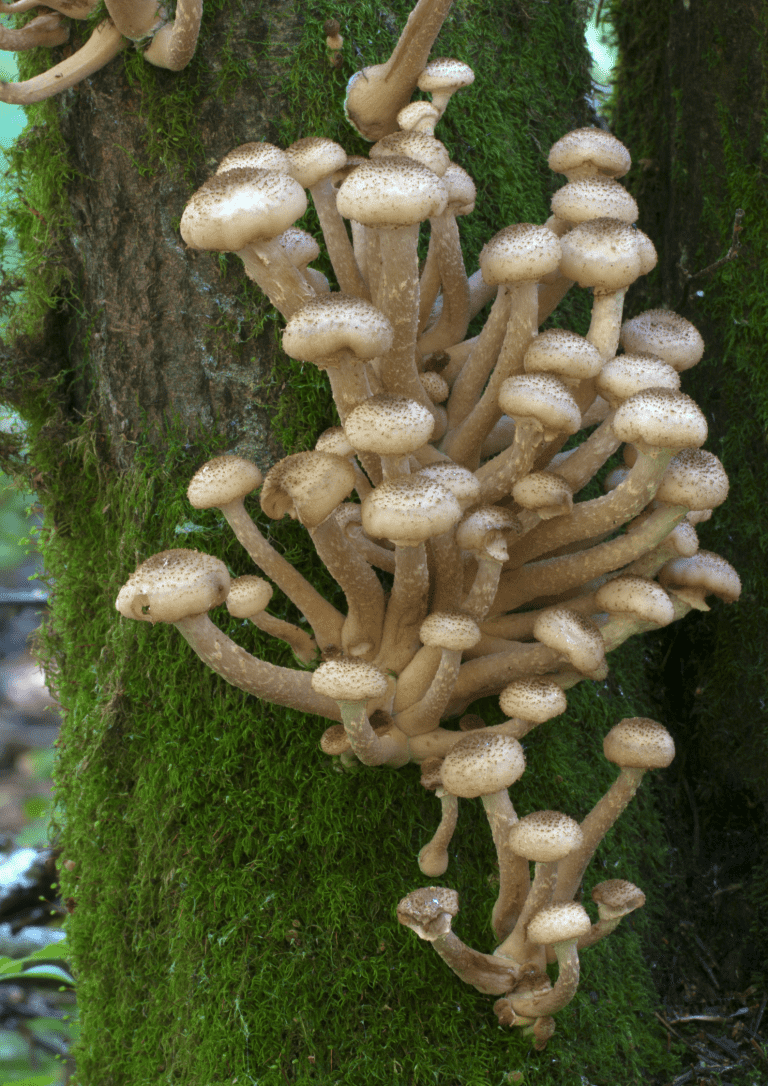
Honey fungus is one of the most destructive problems we come across in Surrey and South West London, and one of the least understood. It lives in the soil and spreads through root systems, killing trees and shrubs from underground long before there’s any obvious sign above it. Sometimes it takes down a single tree quietly over a few seasons; other times it moves through a garden picking off one plant after another. By the time you spot the honey-coloured mushrooms, it’s often already done real damage, and it can already be spreading to whatever’s growing nearby.
What Is Honey Fungus?
Honey fungus (genus Armillaria) is a group of fungi that live in soil and spread by growing root-like strands, called rhizomorphs, through the ground and between root systems. It’s parasitic, it invades and decays the roots and base of trees and woody shrubs, eventually killing them. It’s one of the most common causes of tree and shrub death in UK gardens.
It doesn’t discriminate much by species; established trees, young trees, hedges and shrubs can all be affected, and once it’s established in a garden it can spread to healthy plants nearby through root contact.
Signs to Look Out For
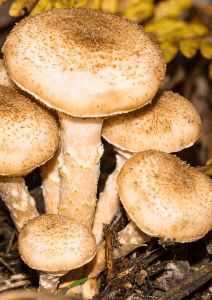
- Honey-coloured toadstools growing in clusters at the base of a tree or stump, usually appearing in autumn. These give the fungus its name, though they don’t always appear every year even where the fungus is present.
- White fungal growth (mycelium) under the bark near the base of the trunk or on roots, this often smells faintly of mushrooms. You may need to gently peel back a small area of bark to see it.
- Black, root-like strands (rhizomorphs) in the soil around the base, sometimes visible if you dig near affected roots, these are how the fungus spreads between plants.
- General decline, thinning canopy, smaller or discoloured leaves, dieback in the crown, or a tree that seems to be struggling without an obvious cause.
- Bark that’s cracked or peeling at the base, sometimes with sap bleeding from the area.
If you’re seeing more than one of these together, it’s worth getting it looked at rather than waiting to see what happens, honey fungus tends to progress rather than resolve on its own.
Why Early Detection Matters
Because most of the damage happens below ground, honey fungus can be well established before there’s an obvious sign above ground. The earlier it’s identified, the more options there are, whether that’s removing an affected tree before it becomes unstable and a safety risk, or taking steps to protect nearby healthy trees and shrubs from the spread.
Left unmanaged, a badly affected tree can become structurally unsound as the roots decay, which is a safety concern if it’s near a path, driveway, or anywhere people or property could be at risk if it fell.
What We Can Do
- Assessment, a proper look at the tree or shrub, checking for the signs above and assessing how far it may have progressed.
- Removal of affected trees where the damage means the tree is dying or has become a safety risk, including safe felling and stump removal to reduce the amount of fungal material left in the ground.
- Advice on nearby planting, since honey fungus spreads through root contact, we can advise on what’s sensible to plant (or avoid planting) near an affected area, and any practical steps to reduce the risk to nearby trees and shrubs.
There’s no reliable chemical treatment or cure for honey fungus once it’s established in a tree, management is generally about removing what’s affected and limiting further spread, which is why an accurate early assessment matters.
FAQs
Can honey fungus be treated or cured?
No, there’s no chemical treatment or cure once it’s established in a tree. Management is about removing what’s affected and taking steps to limit further spread to nearby trees and shrubs, which is why catching it early matters.
Will honey fungus spread to other trees in my garden?
It can. Honey fungus spreads through root contact and through root-like strands (rhizomorphs) that grow through the soil, so trees and shrubs near an affected plant are at risk, particularly if their roots are close by. We can advise on what’s sensible to plant, or avoid planting, near an affected area.
Do I need to remove a tree with honey fungus straight away?
Not always immediately, but it shouldn’t be left unassessed. As the roots decay the tree can become structurally unstable, which becomes a safety issue if it’s near a path, driveway, or anywhere it could cause harm if it fell. We’ll assess how far it’s progressed and advise on timing.
How do I know if it's honey fungus and not something else?
A few other issues, general dieback, other fungal problems, drought stress, can look similar at a glance. The clearest signs are the honey-coloured toadstools at the base in autumn, white fungal growth under the bark, and black root-like strands in the soil. If you’re not sure, send us a few photos or get in touch and we’ll help you work out what’s going on.
Does honey fungus affect all trees and shrubs equally?
It doesn’t discriminate much by species, established trees, young trees, hedges and shrubs can all be affected. Some species are considered more susceptible than others, but nothing in a garden should be assumed safe just because of what it is.
Honey Fungus, in Short
- There's no cure, so the aim is catching it early and limiting the spread
- We'll tell you honestly whether it's honey fungus or something else before recommending anything
- Removal and stump grinding to reduce the fungal material left in the ground
- Advice on what's sensible to replant near an affected area
- Fully insured, NPTC qualified, working to BS3998
- Free site visits, or send us photos first if you'd rather
Is It Definitely Honey Fungus?
A few other issues can look similar at first glance – general dieback, other fungal problems, or simple drought stress can all cause a tree to look unwell. If you’re not sure what you’re looking at, send us a few photos or get in touch and we can help you work out what’s going on before assuming the worst.
Get in Touch
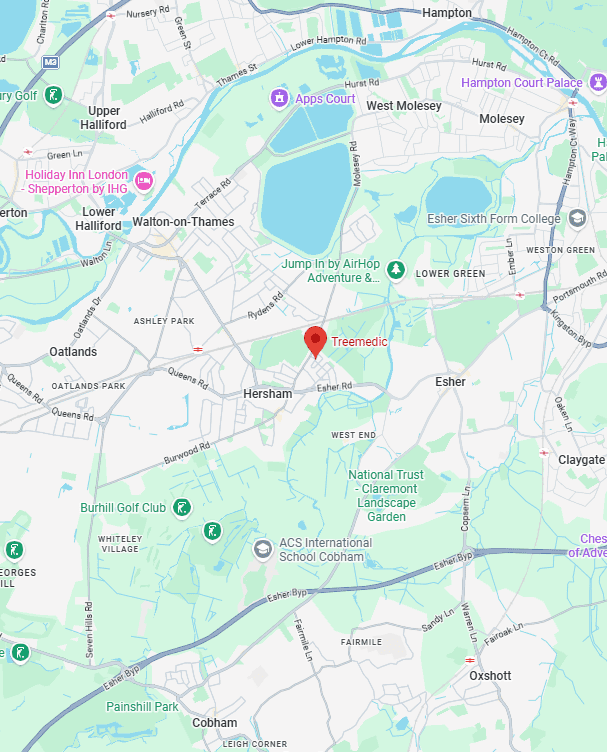
If you think you’ve spotted honey fungus on a tree, shrub, or stump, get in touch for a free, no-obligation assessment. Call 07522 167 197 or 020 3488 8694, or get a free quote.
Office Opening Hours:
Monday – Friday: 07:00 AM – 17:00 PM
Saturday – Sunday: Closed
24/7 Emergency Call-Out Service Available
