At Treemedic Ltd, we provide safe and specialist oak processionary moth (OPM) removal across Hersham, Esher, Cobham, Weybridge, Walton on Thames, Thames Ditton, East Molesey, Claygate, Kingston, Wimbledon and nearby areas.
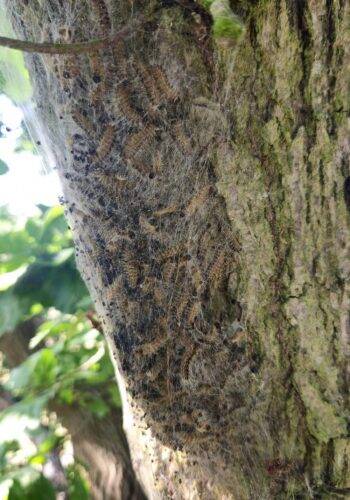
Oak processionary moth is a regulated pest that’s now established across much of Greater London and the surrounding Home Counties. Its caterpillars don’t just damage oak trees. Their tiny hairs are a genuine health hazard to people and pets, which is why removal should always be left to trained professionals with the right equipment. Our team holds Lantra OPM training, so you’re in safe, experienced hands.
Whether you’ve spotted a nest on a garden oak, a tree overhanging a driveway, or caterpillars processing up the trunk, we’ll assess the situation and deal with it safely, with minimal disruption to your property.
Keep everyone away from the tree, including pets, and including the ground beneath it. The hairs accumulate in leaf litter.
Don’t touch it, knock it down or brush it off. And never pressure-wash a nest, that puts the hairs into the air across a wide area and turns a contained problem into a serious one.
Bring washing in and move garden furniture out from under the tree.
Photograph it from a safe distance and send it to us. Identification is free and takes us a minute.
Call 07522 167 197.
If you’ve already been in contact: wash the affected skin and any clothing, and don’t rub your eyes. If you have breathing difficulty, significant swelling or a severe reaction, seek medical advice and tell them you’ve been exposed to OPM hairs.
Removing OPM nests safely takes more than a ladder and a pair of gloves. Here’s how Treemedic Ltd approaches every job:
We start by confirming it's actually OPM. Several harmless caterpillars and webbing moths are commonly mistaken for it. We check the tree for nest size, location and accessibility, and assess the wider risk to people, pets and other oaks nearby before deciding on the safest method of removal.
The most common confusions are brown-tail moth, which also has irritant hairs but builds nests at branch tips rather than on the trunk and affects a wide range of species; ermine moth, which produces spectacular white webbing over whole trees or hedges but is completely harmless; and lackey moth, which makes tented webs. The processional behaviour is the giveaway, nothing else native moves nose-to-tail in single file up an oak trunk.
Our team is Lantra-trained and certified in OPM nest removal, using safe vacuuming and bagging techniques along with full PPE, including respiratory and skin protection, to remove nests and caterpillars without releasing the irritant hairs into the air. Affected material is safely bagged and removed from site, rather than disturbed or knocked down loose.
Once the nest is removed, we clean up the surrounding area thoroughly and, where relevant, report the sighting to the Forestry Commission via TreeAlert. We can also advise on monitoring the tree through the rest of the season, since OPM moths often return to the same trees year after year.
OPM caterpillars are covered in thousands of tiny hairs that contain an irritant protein. Common reasons to call in a professional rather than tackle it yourself include:
Contact with the hairs can cause itchy skin rashes, eye irritation and sore throats, and in some cases breathing difficulties. The hairs can also become airborne, so nests should never be knocked down, brushed off or disturbed without the right protective equipment.
OPM is classed as a quarantine pest in Great Britain, with a Forestry Commission-led control programme in place across the established and buffer zones. Sightings should be reported, and management in higher-risk areas often needs to follow specific guidance.
Nests start out white and silky, can vary considerably in size depending on the infestation, but discolour as the season goes on due to faecal matter — by which point they're easy to mistake for old webbing or debris. Our team knows what to look for at every stage.
Oaks that have had OPM once are likely to attract it again. We can advise on a sensible monitoring and management plan so you're not dealing with the same problem every summer.
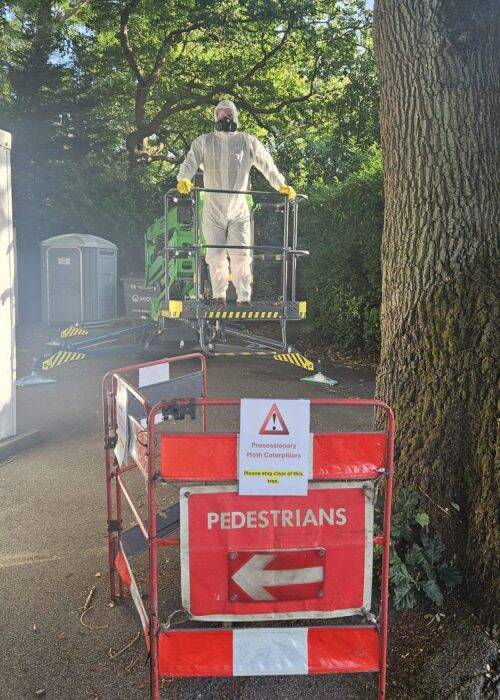
Caterpillars are typically visible from April or May through to July. That’s when the processions and the nests appear.
Removal is most effective before the caterpillars pupate, generally late spring to early summer. Leave it and you get another generation on the same tree.
Spray treatment, where it’s appropriate, has an even tighter window. Early, on young larvae. Once they’re larger it isn’t effective.
Old nests stay hazardous for years. A grey, dirty-looking nest from three seasons ago still carries viable irritant hairs, so it needs removing too.
If you spot it, call early. The difference between May and July is often the difference between one visit and a recurring problem.
If you’re responsible for a site the public or children access, an identified OPM infestation carries a duty of care implication. It needs a documented management response, not a note in a file.
We work with managing agents, schools, housing associations, estates and commercial clients, and we provide:
If you manage oaks across multiple sites, get in touch about a monitoring arrangement rather than waiting for someone to report a nest.
Same careful approach whether it’s one garden oak or a row of them along a driveway.
Spotted a suspected OPM nest, or want a professional check on your oak trees before the caterpillars become a problem? Get in touch with Treemedic Ltd today for a free consultation and quote.
Call 020 3488 8694 or 07522 167 197, or use the enquiry form below, we’ll respond promptly to arrange an inspection at your convenience.
Treemedic Ltd – Based in Hersham, we cover all of Surrey. Give us a call and we’ll come and take a look.
For more guidance on identifying and reporting OPM, visit the Forestry Commission’s guidance on managing oak processionary moth.
OPM caterpillars have black heads and grey-brown bodies covered in long white hairs, and move in distinctive head-to-tail processions up and down oak trunks and branches. Their nests are white, dome or teardrop-shaped, and can vary considerably in size depending on the infestation, discolouring as the season goes on due to faecal matter. If you’re not sure, send us a photo, we’re happy to help identify it before you go anywhere near the tree.
Yes. The caterpillars’ hairs contain an irritant protein that can cause itchy rashes, eye irritation and throat or breathing problems if you come into contact with them, even without touching the nest directly, as the hairs can become airborne. Keep children and pets away and avoid disturbing the tree until it’s been dealt with professionally.
Yes. OPM is a regulated quarantine pest, and sightings should be reported to the Forestry Commission via their TreeAlert portal. We’re happy to handle this for you as part of our removal service.
It depends on the size and number of nests, the height and accessibility of the tree, and how many trees on site are affected. We offer free, no-obligation site visits so we can give you an accurate price before any work begins.
Oaks that have hosted OPM once are often more likely to see it again, as the moths tend to stay close to where they emerged. We can advise on seasonal monitoring so any new nests are caught and dealt with early.
Wash the affected skin and any clothing, and don’t rub your eyes. If you develop breathing difficulty, significant swelling or a severe reaction, seek medical advice and tell them you’ve been exposed to OPM hairs.
Removal is most effective before the caterpillars pupate, generally late spring to early summer. Nests can be removed later, and old nests should be removed regardless since the hairs stay hazardous for years but dealing with it early usually means one visit rather than a recurring problem.
Rarely the right answer, and often not possible. Many oaks in Surrey are protected by Tree Preservation Orders or sit in conservation areas, and OPM on its own isn’t grounds for consent to fell. Treating the infestation is cheaper and keeps the tree.

Automated page speed optimizations for fast site performance
