
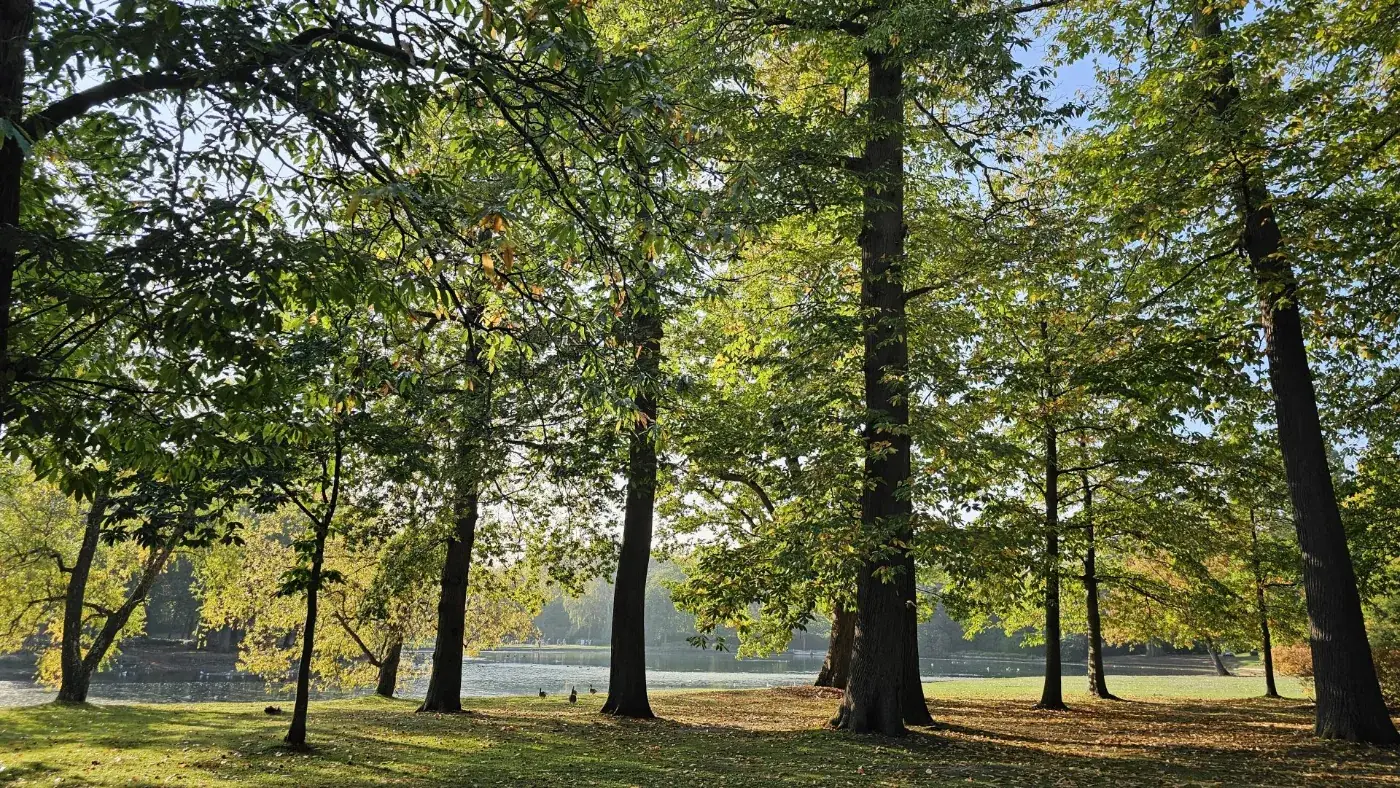
Tree and Hedgerow Planting in Surrey
Planting That Lasts
Tree and Hedgerow Planting in Surrey and South West London
Thinking about planting a new tree or putting in a hedgerow? Privacy, replacing something that’s come down, a home for wildlife, or just a better-looking garden: we can help. We’ll help you choose the species, get the ground ready, plant it and tell you how to look after it. Based in Hersham, we cover Surrey and South West London including Esher, Cobham, Weybridge, Walton on Thames and surrounding areas.
Need something taken out rather than put in? Visit our Tree Removal Service or Stump Grinding Service pages.
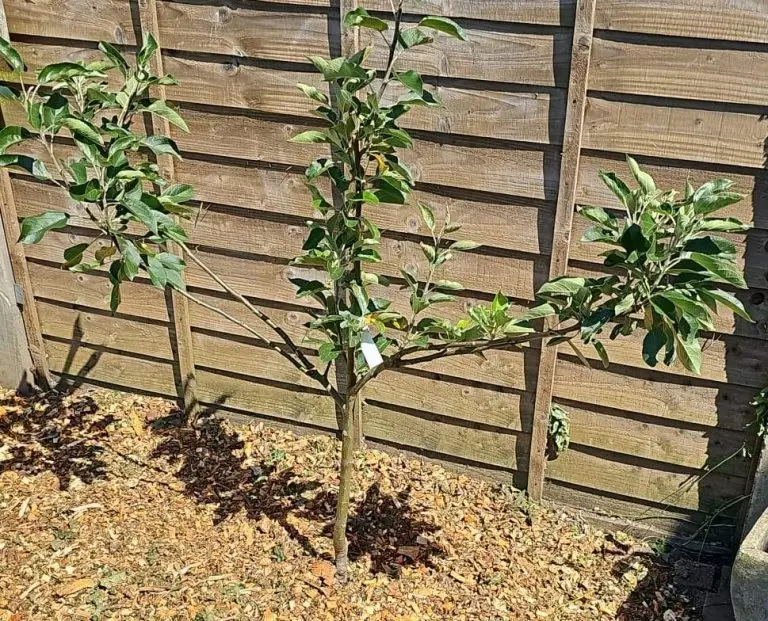
Why Plant Trees and Hedges?
Trees and hedgerows do a lot more than just look good. They give wildlife food and shelter, soak up noise, help with drainage and make a real difference to how a property looks. Getting the species and positioning right from the start makes a big difference to how well they establish and how much maintenance they need going forward.
Planting to BS 8545
A lot of new planting fails in the first few years, and almost always for the same handful of reasons: wrong species for the site, planted too deep, poor root preparation, or nobody watered it through the first two summers.
Read more
We plant to BS 8545, the British Standard covering trees from nursery to independence in the landscape.
Root flare at finished ground level. Planting too deep is the single most common cause of failure, and it kills trees slowly, often years later, long after anyone connects the two.
Proper pit preparation. Decompacted and appropriately sized, not a hole just big enough to squeeze the rootball into.
Correct staking. Low and loose, so the stem can flex and build reaction wood. High tight staking produces a tree that can’t stand on its own when the stake comes off.
Realistic aftercare. We’ll tell you straight what watering it needs, because that’s what determines whether it lives.
Tree Planting, Matched to Your Garden
When new trees fail, it’s usually in their first couple of summers, and usually down to being planted too deep or not getting enough water. So with any tree and hedge planting we look at the site first, pick species that suit it, plant them well and leave you with a simple aftercare plan.
Looking at the Site
Every planting job starts with a proper look at the site. Soil type, drainage, light levels and available space all affect which species will do well and which won’t. Getting this right at the start saves a lot of problems further down the line.
Choosing the Species
Picking a species that suits your garden matters more than almost anything else. Tell us if you’re after shade, colour, wildlife or privacy and we’ll suggest native or ornamental trees that do well in Surrey soil. We buy from UK nurseries we trust, so the stock is good quality.
Planting
We do the planting ourselves: the right spacing and depth, the ground prepared properly, and stakes where they’re needed.
Aftercare
Once it’s planted we’ll tell you how to water and mulch it and whether it needs any early pruning. The first couple of summers matter most, and we’ll tell you what to watch for.
Hedgerow Planting for Borders and Wildlife
A hedgerow screens, marks a boundary and gives wildlife somewhere to live. We’ll help you pick a mix that does the job you need, whether that’s privacy, a boundary or somewhere for the birds.
Planning the Hedge
Before we plant anything we’ll ask what you want the hedge to do: screen the garden, mark a boundary or bring in wildlife. Then we plan the layout and the mix of species around that.
Choosing the Species
We plant a range of native hedging species including hawthorn, field maple, hazel and beech, all of which are well suited to Surrey conditions. Natives establish well, need less looking after and are the best choice for wildlife. We can mix species too, so there’s something to look at in every season.
Planting It
Correct spacing and planting depth make a real difference to how quickly a hedge establishes and how dense it grows. We’ll explain what we’ve done and why, so you know how to look after it.
Keeping It in Shape
We’ll give you a clear maintenance schedule covering formative pruning in year one and ongoing shaping as the hedge matures. Or if you’d rather we looked after it, we can come back for regular hedge cuts.
When to Plant Bare Root
Bare root hedging is planted November to March only. It is far cheaper than pot-grown, establishes better, and the window is fixed. Miss it and you are waiting a year or paying considerably more for container stock.
Spacing
Usually five or six plants per metre in a double staggered row. We also cut back after planting, which sounds counterintuitive but forces the low branching that makes a hedge dense rather than leggy.
Protecting and Watering
Rabbit and deer guards are essential across most of Surrey, not optional. The first two summers matter most: watering is the difference between a hedge and a row of dead sticks.
Need Screening Quickly?
A native hedge takes three to five years to screen properly. If you need privacy next year, semi-mature evergreen is the better answer and we will say so rather than sell you something that will not do what you want.
An Instant Laurel Hedge in Esher
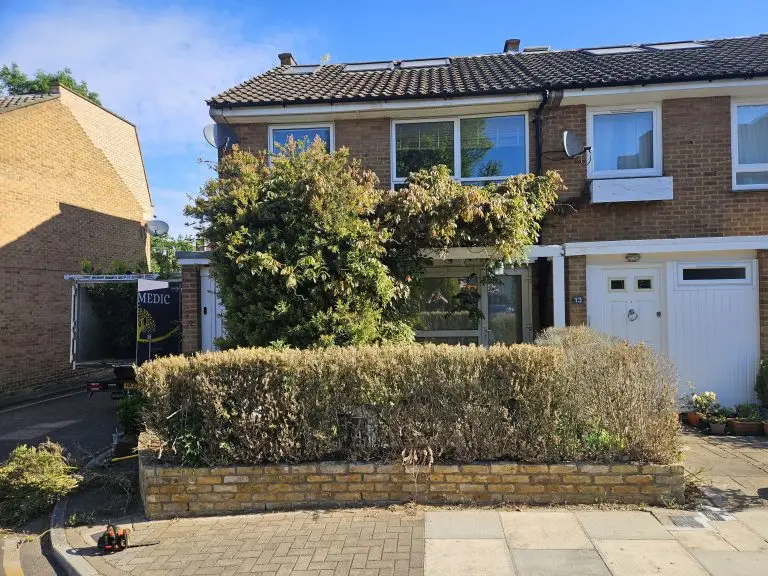
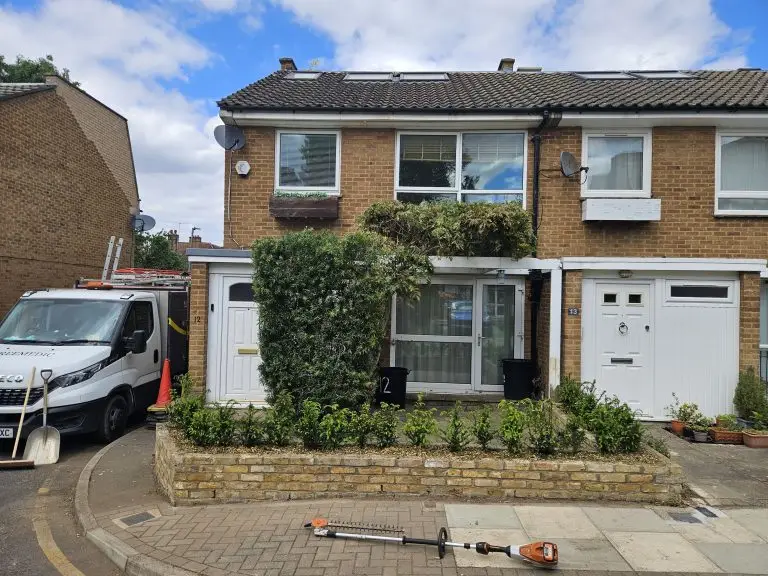
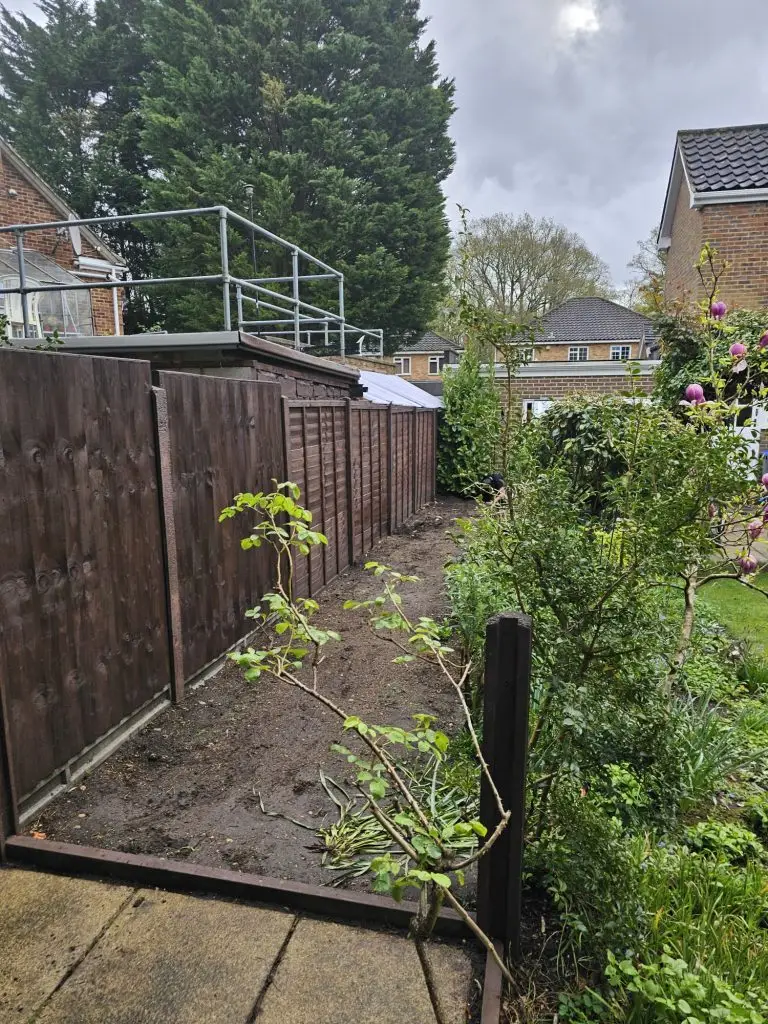
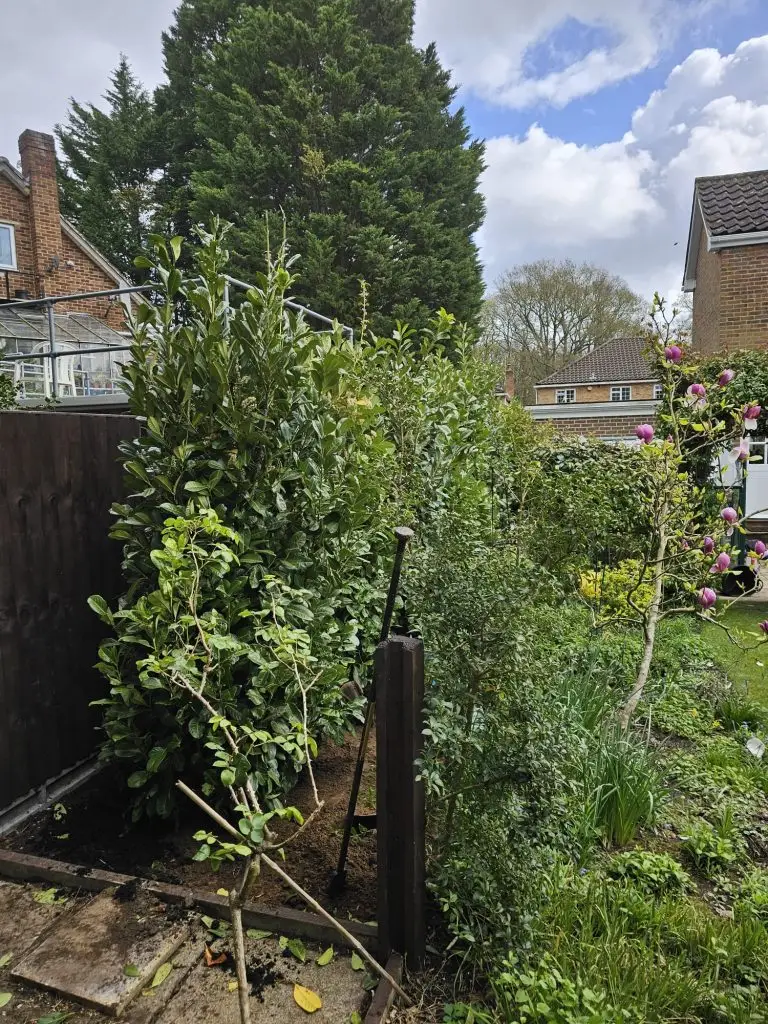
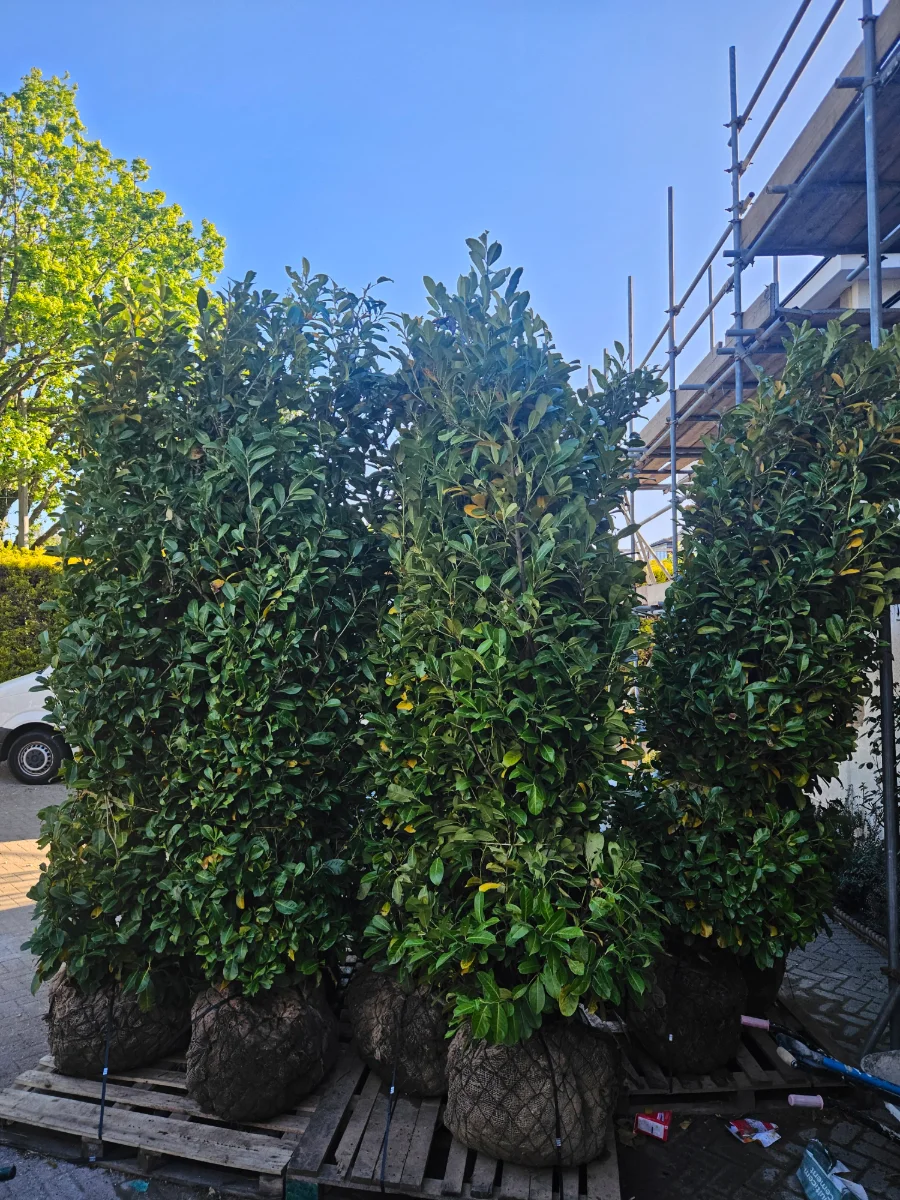
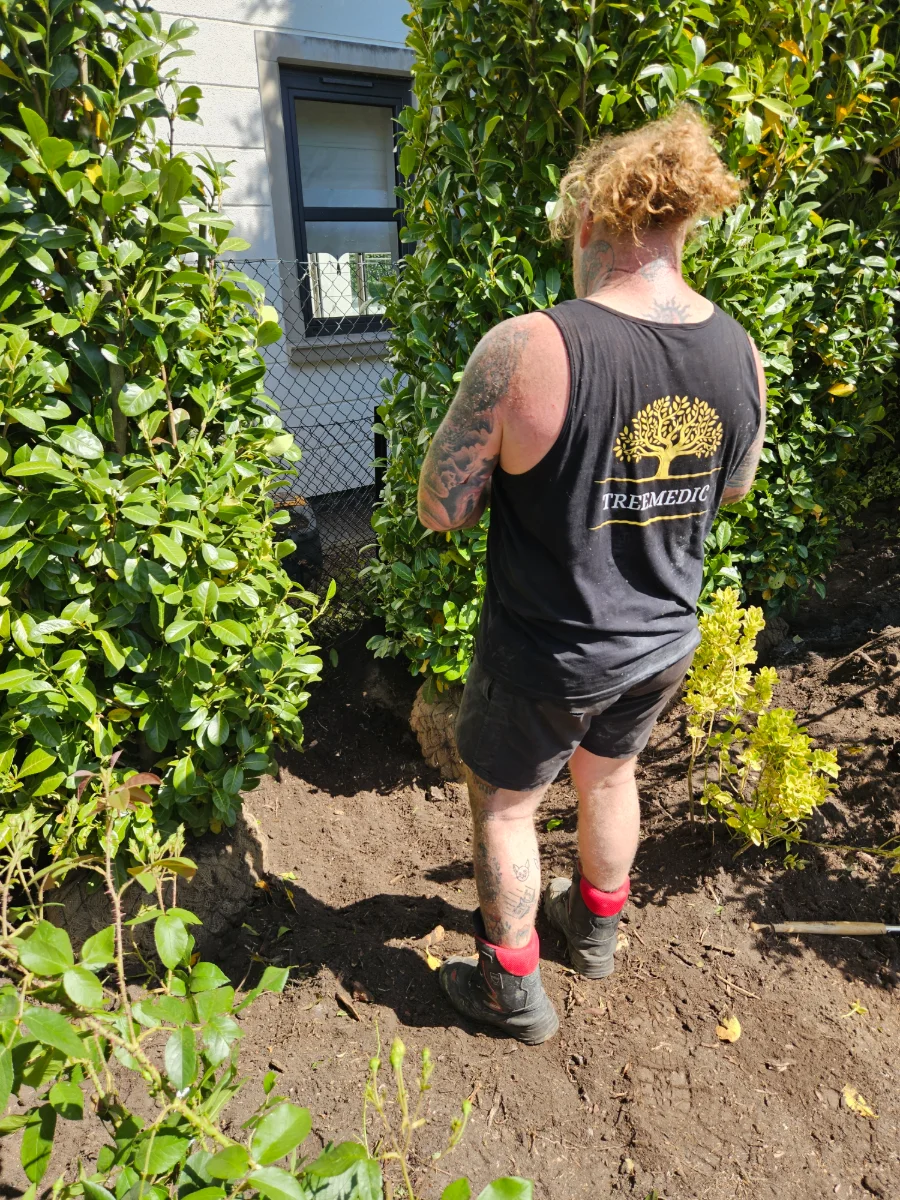
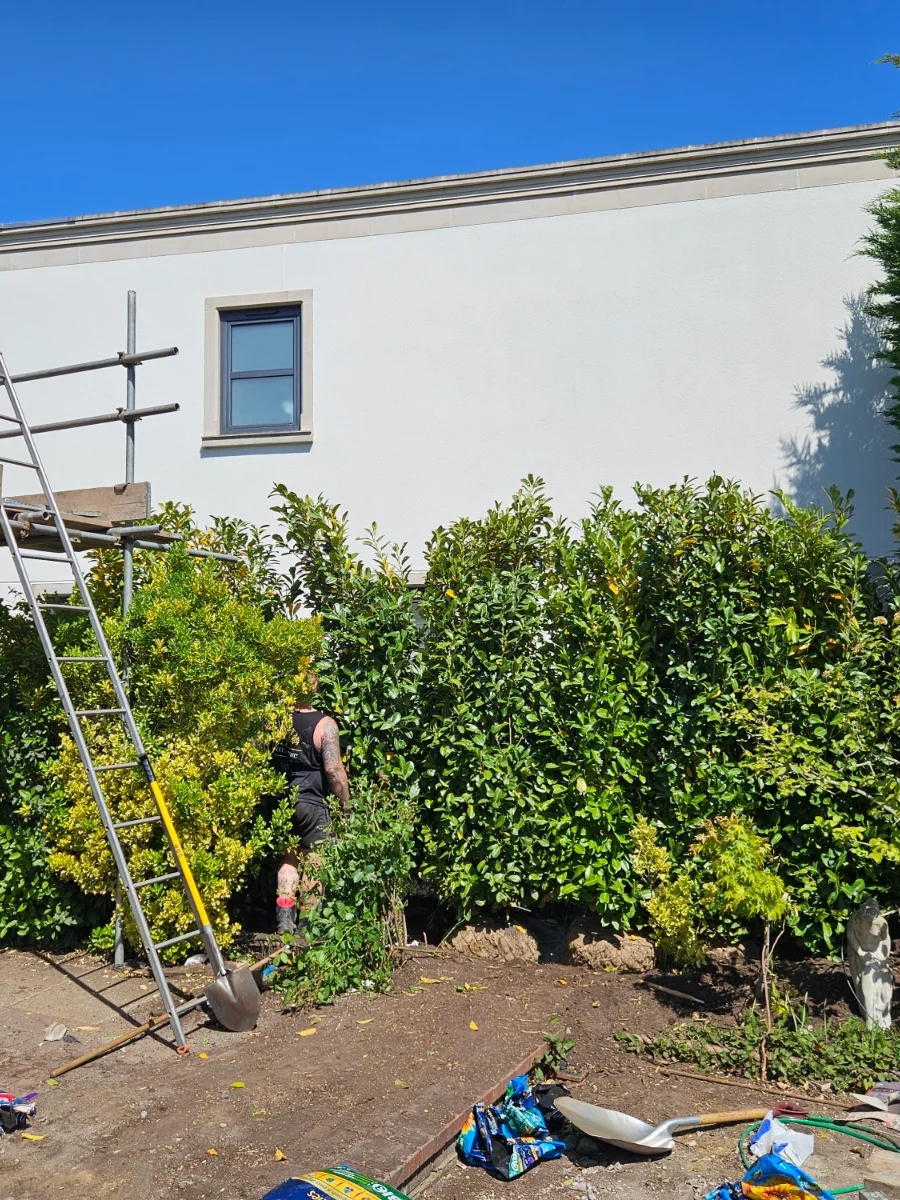
For instant screening along the boundary of this Esher garden, we planted twelve semi-mature cherry laurels, each already 3 to 3.5m tall. We cleared the old shrubs and ground out the stumps first, then planted every laurel into its own properly prepared pit with mycorrhizal fungi and a woodchip mulch, which gives big rootballed plants like these the best start.
Replacement Planting and Planning Conditions
If your tree work was tied to a planning permission or a TPO consent, replacement planting is often a condition rather than a suggestion. Failing to comply can hold up sign-off or trigger enforcement action.
Read more
We handle planting that has to satisfy a condition:
- Planting to the specified species, size and location
- Correct nursery stock specification (girth, form and root type)
- Photographic records
- Written completion reports for the council
We write these regularly for Elmbridge, Kingston and Richmond. If you’ve had a consent letter with a planting condition attached and aren’t sure what it’s asking for, send it over and we’ll tell you.
Why Getting It Right Matters
A badly planted tree or hedge can fail to establish, grow in the wrong direction or need removing within a few years. Done well, trees and hedgerows planted today will still be improving your property in 20 or 30 years’ time. We take the time to get it right, and if something is not going to work in your space, we will tell you.
For more on planting, the Royal Horticultural Society has good hedge-planting guides.
Tree and Hedgerow Planting: Common Questions
When is the best time to plant trees and hedges?
Autumn through early spring, while trees are dormant and the ground is workable. Bare root stock has a fixed window of roughly November to March (it isn’t available outside that), and it’s considerably cheaper and establishes better than pot-grown. Container-grown plants can go in at most times of year provided they’re kept watered, but they cost more and need more aftercare.
Do you supply the trees and hedging plants?
Yes. We source trees and hedging from UK nurseries and pick the size and species to suit your site and soil.
Can you help design and space the planting?
Yes. We’ll help with spacing, layout and which species to use, whether you’re after privacy, wildlife or something ornamental.
Do you offer aftercare or maintenance once planting is complete?
Yes. We’ll give you an aftercare plan covering watering and formative pruning, and we can come back to trim the hedge for you.
Do you plant to a recognised standard?
Yes, BS 8545, the British Standard covering trees from the nursery through to establishment. In practice that means correct planting depth with the root flare at ground level, proper pit preparation, low and loose staking, and a realistic aftercare plan.
My planning permission says I have to plant replacement trees. Can you handle that?
Yes, including the species and stock specification, the planting itself, photographic records and a written completion report for the council. We do these regularly for Elmbridge, Kingston and Richmond.
How long before a new hedge gives me privacy?
Bare root native hedging takes three to five years to screen properly. Semi-mature evergreen gives you an instant screen but costs considerably more. We’ll price both if you want to compare.
Do you guarantee the trees will survive?
We plant to BS 8545 and give you a realistic aftercare plan, but establishment depends heavily on watering through the first two summers, which is usually down to you. We’ll be straight about what it needs rather than promising something outside our control.
Planting, in Short
- We plant to BS 8545, root flare at ground level, proper pit prep, low and loose staking
- We’ll tell you what will actually thrive on your soil rather than what looks good in a catalogue
- Bare root hedging November to March, considerably cheaper and it establishes better
- Replacement planting to satisfy a TPO or planning condition, including the completion report for the council
- Realistic aftercare advice, because watering through the first two summers is what decides whether it lives
- Free written quotes. The price we quote is the price you pay
Want to Talk Through a Planting Project?
Give us a call and we’ll come and look at the spot with you. Quotes are free, with no obligation.
Or ring the office on 020 3488 8694. We cover Hersham, Esher, Cobham, Weybridge, Walton on Thames, Thames Ditton, East Molesey and across Surrey and South West London.