
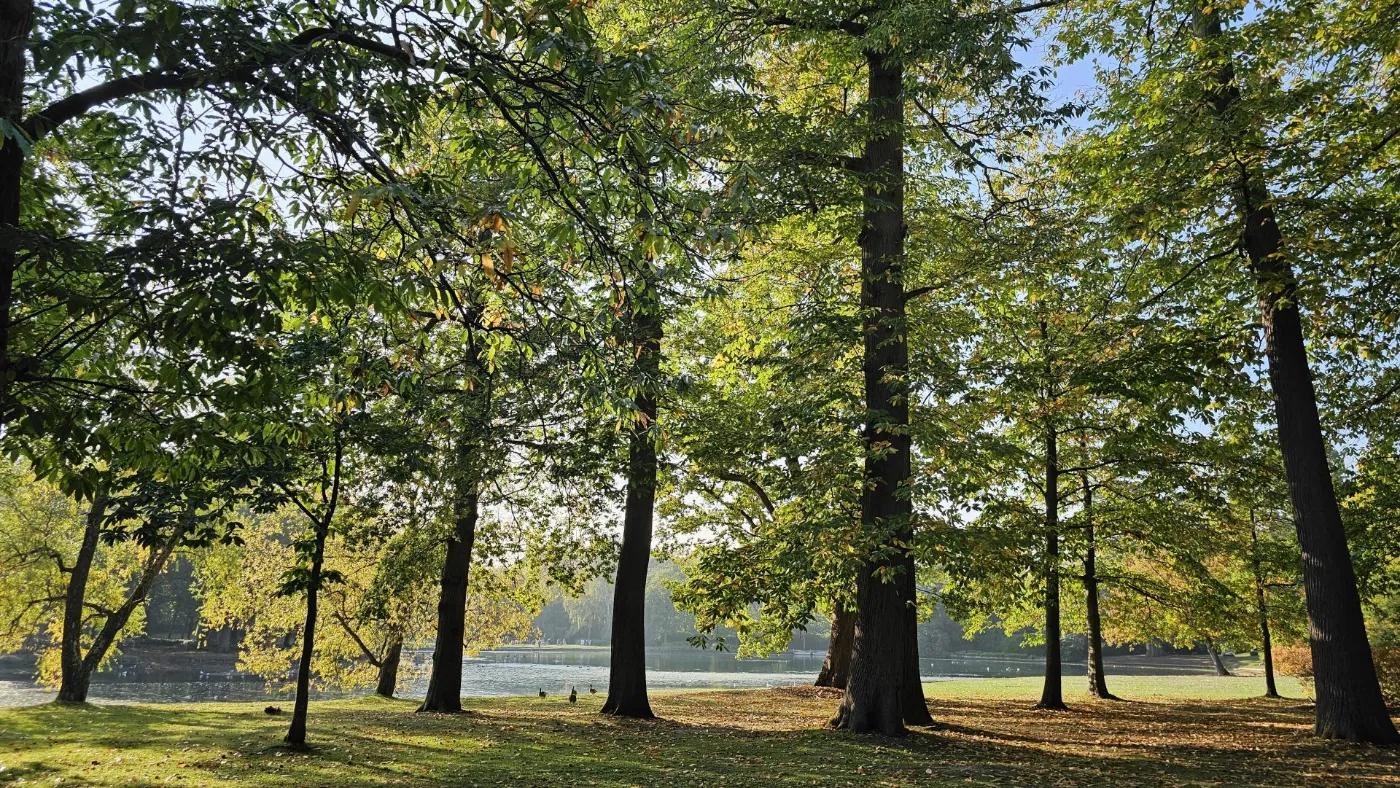
Trees and Building Work: Protecting Roots
Extensions, driveways, garden rooms and new patios are some of the most common reasons good trees go into decline. The damage happens underground, out of sight, and often doesn’t show in the tree for years.
If you’re planning work near a tree, read this before the builders turn up.
Where the Roots Really Are
Most people picture tree roots as a mirror of the branches, going deep. In reality, most of a tree’s roots are in the top metre or so of soil, and they often spread well beyond the edge of the canopy. That’s exactly the layer that gets dug, driven over and covered during building work.
The British Standard for trees and construction, BS5837, uses a simple rule of thumb for the area to protect: a circle with a radius of 12 times the trunk’s diameter, measured 1.5 metres above the ground. For a tree with a trunk 40cm across, that’s a circle nearly 5 metres out from the trunk.
What Damages Roots
- Digging trenches for foundations, drains, cables and pipes.
- Compacting the soil with diggers, skips, stacked materials and repeated foot traffic.
- Raising or lowering ground levels, even by a few centimetres.
- Covering the ground with patios, driveways and other hard surfaces that stop air and water getting in.
- Spilling cement, fuel or washing out mixers near the tree.
A tree with damaged roots may look fine for a year or two, then start to thin and die back. By then it’s usually too late to put right.
Before Work Starts
- Check if the tree is protected. Root pruning a tree with a Tree Preservation Order, or in a conservation area, needs the council’s consent or notice just like pruning the branches.
- Check your planning permission. If the work needs planning permission, the council may ask for tree information with the application, and may add conditions about protecting trees during the work.
- Fence off the root area before any machinery arrives, and keep materials, skips and vehicles out of it.
- Plan service runs for drains, cables and pipes to go around the root area rather than through it.
- Ask about tree-friendly methods, such as hand-digging near roots, ground protection boards, raised or no-dig driveways, and foundations designed to bridge over roots.
For a planning application that needs a formal tree survey and protection plan, you’ll need an arboricultural consultant. We don’t write those reports ourselves, but we can carry out the tree work they recommend.
Clay Soil and Your House
Much of South West London and north Surrey sits on clay, which shrinks when it dries out and swells when it gets wet. Large, thirsty trees close to a building can dry the clay further in a hot summer, and in some cases that contributes to subsidence.
It works the other way too. Taking out a large tree on clay can let the ground swell back up over time, which is called heave. So if you’re worried about cracks in your house, talk to your insurer before removing any trees, and let them arrange the proper investigation.
If you’re building near trees on clay, the foundations need to be designed for it. The NHBC standards that most builders and engineers work to have a whole section on building near trees.
Planning Some Work?
If you’re planning building work, get in touch early. We can check whether your trees are protected, handle any council notice or application, and carry out pruning, crown lifting or removal before the builders start, so the trees are sorted by a climber rather than a digger.
There’s more on our tree pruning and tree removal pages. If you’ve got plans drawn up, send them over with a photo of the tree on WhatsApp, or ring 07522 167 197.
Trees and Building Work: Common Questions
How close can I build to a tree?
It depends on the size and type of tree, the soil and the kind of foundations. For anything more than a small garden building close to a large tree, get advice from an arboricultural consultant or structural engineer before you finalise the plans.
Can I cut roots that are in the way?
Small roots can sometimes be cut cleanly without harming the tree, but larger roots can affect its health and stability. If the tree has a Tree Preservation Order or is in a conservation area, root pruning needs the council’s consent or notice first.
Will a new driveway harm my tree?
It can, if the ground is dug out and covered with an impermeable surface. Permeable, no-dig construction near trees is much kinder to the roots. Talk to your driveway installer about it before they start.
Do I need a tree survey for planning permission?
If there are trees on or near the site, the council may ask for one with the application. That’s done by an arboricultural consultant. We can then do the tree work it recommends.
Should I remove a tree before building near it?
Not automatically. A well-protected tree can survive building work nearby, and on clay soil removing a large tree can cause problems of its own. Get advice for your particular site first.